WhatsApp: +255 716 641 582

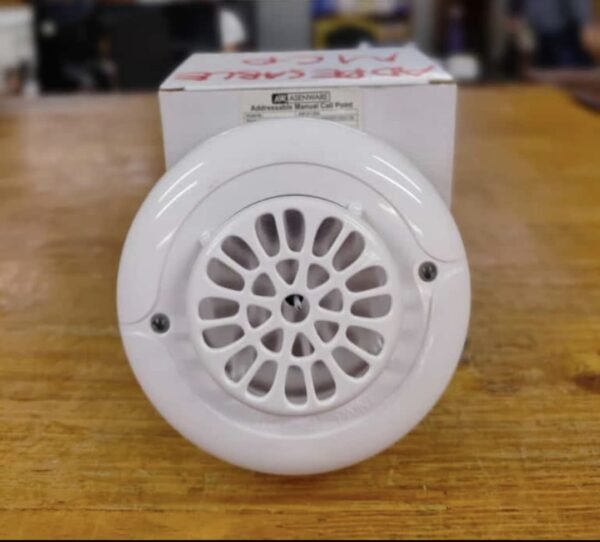
ASENWARE AW-D102 Addressable Heat Detector
The ASENWARE AW-D102 Addressable Heat Detector provides intelligent fixed-temperature and rate-of-rise fire detection for compatible addressable alarm systems. It activates when the temperature reaches approximately 57°C or rises rapidly at the specified rate, while its unique device address allows the control panel to identify the precise alarm location. Featuring two-wire connectivity, dual red LED indicators and remote panel testing, it is suitable for kitchens, generator rooms, workshops, warehouses, plant rooms and other approved commercial or industrial applications.
The ASENWARE AW-D102 Addressable Heat Detector is an intelligent fire detection device designed to monitor changes in ambient temperature and communicate alarm information to a compatible addressable fire alarm control panel. It is suitable for locations where a fire is expected to produce a rapid increase in heat or reach a predetermined temperature threshold.
Each detector is assigned a unique address within the fire alarm system. This allows the control panel to identify the exact detector and programmed location that has activated, helping building managers, security teams and emergency responders investigate alarms more quickly.
The AW-D102 combines fixed-temperature and rate-of-rise heat detection. It can initiate an alarm when the surrounding temperature reaches approximately 57°C or when the temperature rises rapidly at the detector’s specified rate. It is designed for connection to the ASENWARE AW-FP100 Series Addressable Fire Alarm Control Panel.
Primary Function
The detector is designed to:
- Continuously monitor temperature conditions within a protected area
- Detect a rapid increase in ambient temperature
- Detect when the fixed alarm temperature is reached
- Send an individually addressed alarm signal to the control panel
- Help identify the exact detector and location associated with an alarm
- Provide visible status and alarm indication through integrated red LEDs
- Support remote testing through the compatible control panel
How the Addressable Heat Detector Works
During normal operation, the detector continuously measures the surrounding temperature while communicating with the addressable fire alarm control panel.
When the temperature rises at the programmed rate or reaches the fixed alarm threshold:
- The detector identifies the abnormal heat condition.
- It sends its unique address and alarm status to the control panel.
- The control panel displays the programmed detector location.
- The detector’s red indicators remain illuminated.
- The control panel activates the programmed alarm sounders, strobes and other connected fire safety outputs.
The system remains in alarm until it has been investigated and reset by authorised personnel.
Key Product Features
- Intelligent addressable heat detection
- Fixed-temperature and rate-of-rise operation
- Approximate 57°C fixed-temperature alarm
- Rate-of-rise alarm at approximately 7.1°C within five seconds
- Unique device addressing for accurate location identification
- Addressable analogue communication
- Two-wire loop connection
- Low operating and standby current
- Two red LED status indicators
- LEDs flash during normal monitoring
- LEDs remain continuously illuminated during an alarm
- Remote testing from the compatible control panel
- Connection terminals for an optional remote indicator
- Compact ceiling-mounted design
- Suitable for indoor addressable fire alarm systems
- Compatible with the ASENWARE AW-FP100 Series panel
The AW-D102’s addressable communication, temperature thresholds, LED operation and two-wire connection are specified by ASENWARE for this model.
Product Specifications
- Brand: ASENWARE
- Model: AW-D102
- Product Type: Addressable heat detector
- Detection Method: Fixed temperature and rate of rise
- Detector Classification: A2R
- Fixed Alarm Temperature: Approximately 57°C
- Rate-of-Rise Alarm: Approximately 7.1°C within five seconds
- Operating Voltage: 18V to 28V DC
- Normal Operating Current: Maximum 2.5mA
- Alarm Current: Maximum 3mA
- Operating Temperature: Approximately -10°C to 50°C
- Communication Type: Addressable analogue
- Wiring Method: Two-wire loop connection
- Alarm Indicators: Two red LEDs
- Remote Indicator Connection: Supported
- Remote Testing: Supported through the control panel
- Approximate Diameter: 99.8mm
- Referenced Standard: EN 54-5:2000
- Compatible Panel: ASENWARE AW-FP100 Series
- Installation Type: Ceiling-mounted
- Colour: White
- Usage Environment: Indoor fire detection systems
These specifications are based on the manufacturer’s published information for the AW-D102 model.
Recommended Applications
The ASENWARE AW-D102 Addressable Heat Detector may be suitable for:
- Commercial kitchens
- Boiler rooms
- Generator rooms
- Plant and machinery rooms
- Workshops and garages
- Warehouses and storerooms
- Industrial production areas
- Laundry and utility rooms
- Parking facilities
- Mechanical and electrical service areas
- Factories and manufacturing facilities
- Hotels and lodge service areas
- Apartment building service rooms
- Schools and institutional facilities
- Commercial and industrial buildings
The final detector type and placement should be determined by a qualified fire alarm designer according to the building layout, environmental conditions and applicable fire safety requirements.
Suitable Installation Environments
Heat detectors are commonly considered for locations where normal operating conditions may include steam, dust, fumes or airborne particles that could cause unwanted activation of a smoke detector.
The detector may therefore be useful in selected kitchens, workshops, plant rooms and similar locations where detecting abnormal temperature changes is more appropriate than relying only on smoke detection.
However, the detector must not automatically be treated as a replacement for a smoke detector. Heat detectors may respond later than smoke detectors in some types of fire, so each installation should be based on a professional fire-risk assessment and approved system design.
Important Product Limitations
The AW-D102:
- Does not independently detect smoke
- Does not detect carbon monoxide
- Does not directly detect flames
- Does not produce a full evacuation alarm by itself
- Is not a standalone battery-powered alarm
- Must be connected to a compatible addressable fire alarm control panel
- Must be correctly addressed and programmed before use
- Should not be installed in unsuitable environmental conditions
- Should not be painted, covered or obstructed
- Must not be installed based only on room size without considering applicable design requirements
A complete fire alarm system may also require smoke detectors, manual call points, alarm sounders, visual alarm devices, interface modules, backup power supplies and other components.
Installation and Commissioning
The detector should be installed, wired, addressed and commissioned by a qualified fire alarm technician. The installation should follow the approved system design, manufacturer instructions and applicable fire safety standards.
Professional installation should include:
- Confirming compatibility with the fire alarm control panel
- Installing the correct mounting base
- Connecting the detector to the addressable loop
- Assigning a unique device address
- Programming an accurate location description
- Confirming the correct detector type in the panel settings
- Testing normal communication with the control panel
- Testing the alarm response
- Checking the red LED indicators
- Testing any connected remote indicator
- Confirming activation of the required alarm outputs
- Recording the detector in the system documentation
Detector spacing, ceiling position and installation height should be determined according to the approved fire alarm design and applicable local requirements.
Inspection and Maintenance
Regular inspection and testing are required to ensure the detector continues to operate correctly. Routine maintenance should include:
- Confirming that the detector remains securely mounted
- Checking for physical damage or discolouration
- Removing dust and dirt using approved cleaning procedures
- Confirming that the detector openings are not blocked
- Checking that the status LEDs operate correctly
- Testing communication with the control panel
- Performing an approved heat detector test
- Confirming that the correct detector address appears on the panel
- Checking the programmed location description
- Reviewing any detector fault messages
- Recording inspection and testing results
- Replacing damaged or unreliable detectors
Testing should be performed using approved heat detector testing equipment. Open flames, uncontrolled heating devices or methods that could damage the detector should not be used.
Important Product Note
This product is an addressable heat detector and forms one component of a complete fire alarm system. It requires a compatible ASENWARE addressable control panel, correct loop wiring, programming and professional commissioning before it can provide effective fire detection.
Reviews
There are no reviews yet.